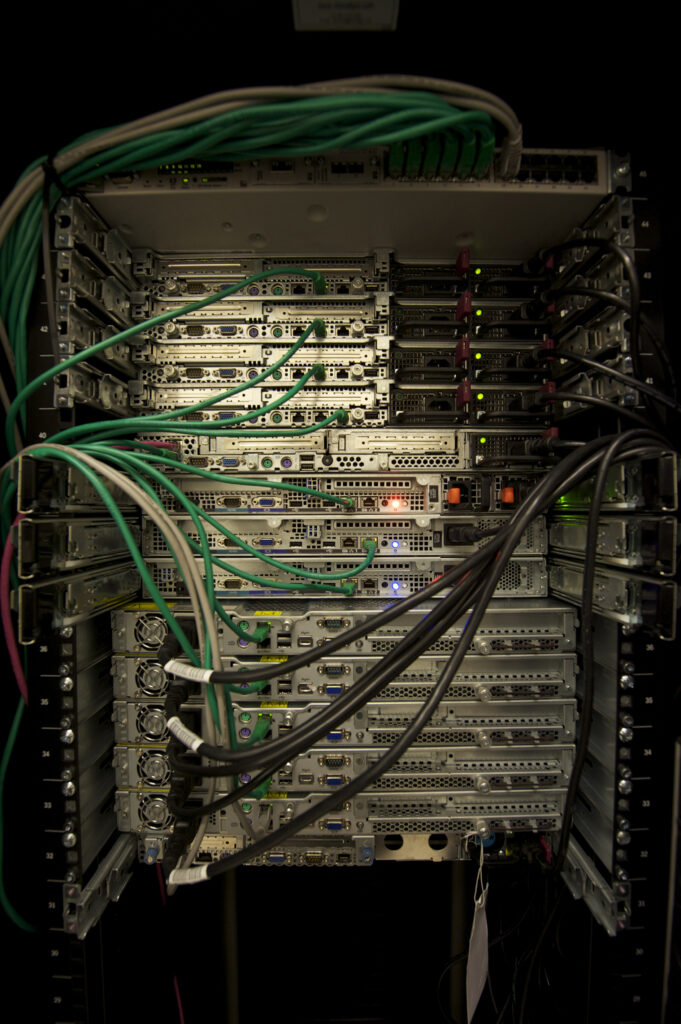
Google open-sourced TorchTPU, its stack for running PyTorch on TPUs, accelerators designed for machine-learning computation. The announcement expands TPU options for training and inference while retaining familiar PyTorch interfaces and tools. Google Cloud official announcement
Google describes eager execution, torch.compile, and integrations with major serving and training tools. That does not establish automatic portability for every CUDA-specific workload. Identify custom kernels and dependencies on GPU-specific libraries before estimating migration effort.
On this page
PyTorch operations and device implementations are different layers
PyTorch expresses tensor operations and neural-network computation. A tensor is a multidimensional array of numbers, while a CPU, GPU, or TPU performs the underlying work. The same Python operation still needs an implementation for the selected device. TorchTPU broadens that execution path; it does not convert GPU hardware or establish portability for every component surrounding a model.
A model built from standard PyTorch operations is a useful starting point. Code calling a CUDA extension or a custom GPU kernel needs a separate compatibility review. Include preprocessing and postprocessing libraries in the inventory. Dividing dependencies by execution path makes it easier to distinguish code that can enter an evaluation directly from code requiring replacement or additional validation.
Separate compilation from steady-state execution
Eager execution performs operations as they are called and is convenient for inspecting intermediate results. Compilation optimizes an execution plan but can add preparation time. That cost matters differently to a short-lived job and a continuously running model server. Report first-run preparation separately from warmed-up execution instead of hiding both phases inside a single average.
Hold numerical precision and batch size consistent when comparing devices. Precision affects representation, memory demand, and potentially output differences. A larger batch can improve total throughput while increasing the delay experienced by an individual user. Record throughput, request latency, and an acceptable output tolerance as separate measures so that a favorable result in one does not conceal a regression in another.
Choose an evaluation that exercises the real application path
For a hypothetical migration trial, select one frequently used model and representative inputs, including normal and larger input sizes. A test containing only tiny examples can miss memory pressure or repeated compilation. Distinguish out-of-memory failures, unsupported operations, and compilation behavior in the results. Each points to a different next step and a different amount of engineering work.
Compare cost per successfully completed task, including model loading, preparation, required device count, data movement, and failed retries. The hourly accelerator price alone is insufficient. These are proposed evaluation methods, not measurements of TorchTPU performance. Use results from your model and operating pattern to decide whether a larger migration experiment is justified.
Scope a small portability experiment
- Inventory CUDA extensions and custom operators.
- Check support for your model, precision, and PyTorch version.
- Compare output quality and total processing cost using identical inputs.
Judge a TPU deployment using your own workload and operating constraints rather than vendor performance examples. The open stack provides a basis for that evaluation.
Announcement reference date: 2026-10-21 · Checked: October 24, 2026



