If you follow one Bitcoin-related event on October 26, put this week’s US Federal Open Market Committee (FOMC) meeting on your calendar. The Federal Reserve lists the meeting for October 27–28. The policy statement is scheduled for October 28 at 2:00 p.m. Eastern Time, followed by the press conference at 2:30 p.m. In South Korea, those events fall at 3:00 a.m. and 3:30 a.m. on Thursday, October 29.
This is a guide to the schedule and what to read ahead of the meeting. As of October 26 in Korea, the decision has not been announced. The useful distinction is between the policy decision itself and what the accompanying explanation says about future policy.
On this page
The statement and press conference are 30 minutes apart
The Fed’s October calendar lists the decision at 2:00 p.m. and the press conference at 2:30 p.m. on the 28th. Eastern Time on that date is Eastern Daylight Time, or EDT, four hours behind UTC.
| Release | US Eastern / UTC | Korea time |
|---|---|---|
| Policy statement | Oct 28, 14:00 EDT / 18:00 UTC | Oct 29, 03:00 KST |
| Press conference | Oct 28, 14:30 EDT / 18:30 UTC | Oct 29, 03:30 KST |
Korea is nine hours ahead of UTC, making it 13 hours ahead of US Eastern Time for this meeting. A US headline referring to the “October 28 decision” therefore refers to the early morning of October 29 in Korea. Check the official calendar again if the schedule changes.
The 30-minute gap matters when reading coverage. An article published immediately after the statement cannot yet incorporate the press conference’s questions and answers. That later discussion can provide more detail about the reasoning behind the decision and the conditions policymakers will assess next.
Why US interest rates matter to Bitcoin holders
The Fed influences financial conditions by setting a target range for the federal funds rate, the overnight rate on reserve lending between banks. Its monetary policy explanation describes how both current policy and expectations about future policy can affect longer-term rates, asset prices and exchange rates.
Applied to Bitcoin, this provides a way to think about investors’ choices between cash, bonds and risk assets. Simply holding BTC does not produce a fixed interest payment, so changes in the returns available on interest-bearing assets can alter the comparison investors make. This is an interpretation of financial conditions, rather than a formula for calculating Bitcoin’s price from an interest rate.
A 2023 working paper by IMF researchers also examines the connection. It finds that US monetary tightening affects the common price factor in crypto markets through investors’ willingness to take risk. That historical research does not forecast Bitcoin’s move immediately after this particular meeting.
Read the rate decision and future policy signals separately
Start with the target rate range announced in the statement. Then read the assessments of inflation and employment, and the conditions described for further policy adjustments. Even an unchanged rate can come with a different explanation of what policymakers may need to do next.
For example, two hypothetical decisions to hold rates steady could emphasize different concerns: persistent inflation in one case and weakening employment in another. Those examples illustrate how to read the material; they are not descriptions of the upcoming decision. The actual statement and press conference are needed to establish what the committee says.
After a price move, explanations can appear quickly. Look for the specific passage in the Fed’s original material that supports an interpretation. Distinguishing the decision from changes in the expected policy path helps explain why the same rate number can receive different readings.
No regular dot-plot release is scheduled for this meeting
The FOMC meeting calendar marks meetings associated with a Summary of Economic Projections (SEP) with an asterisk. The October 2026 meeting has no asterisk; the next marked meeting is December 8–9. A new regular dot-plot release should therefore not be assumed for October.
The SEP collects participants’ projections for growth, unemployment, inflation and the appropriate policy rate. The chart showing individual rate projections as dots is commonly called the dot plot. The Fed’s SEP explanation says the projections are released four times a year.
For this meeting, that makes the statement’s wording and the press conference especially useful material to review. If a news article or social post shows a dot plot, check the meeting date on it. An earlier projection used as background carries different information from a newly released forecast.
Match observation times when reviewing the reaction
To review the response later, record BTC prices from the same provider before the statement, after the statement and after the press conference. Keep the exchange and observation time with each value. Comparing a won price on one exchange directly with a dollar price elsewhere can mix in exchange-rate movements and differences between markets.
Treasury yields and the dollar can provide context for whether Bitcoin’s move overlaps with a broader financial-market reaction. Simultaneous movements alone do not establish causation. This pre-meeting guide contains no post-decision price observations or meeting outcome.
For now, keep the statement and press conference as two separate entries on your calendar. Read the announced rate decision first, then review the explanation after the press conference. Before drawing a trading conclusion, identify which information is actually new.
Original sources and background
Federal Reserve October 2026 calendar: release times · FOMC calendar and meetings with projections
Federal Reserve: how monetary policy affects financial conditions · Federal Reserve: the Summary of Economic Projections · IMF working paper: The Crypto Cycle and US Monetary Policy, August 4, 2023
Related reading
US spot Bitcoin ETFs lose $635 million in one session
Bitcoin falls below $81,500 as the technology-stock selloff spreads
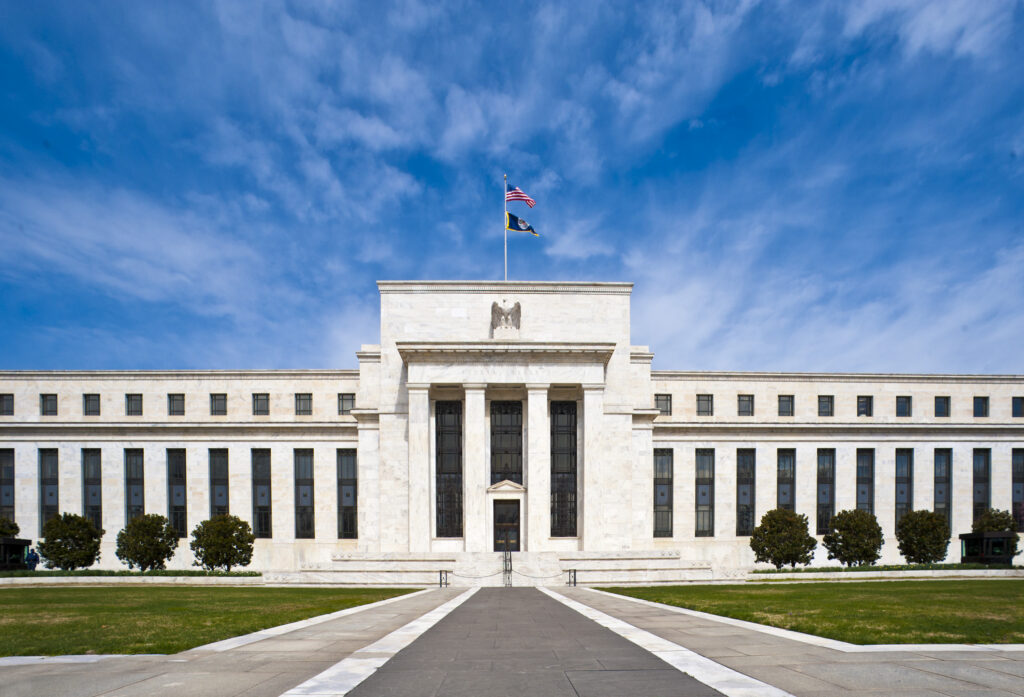
Sources checked: October 26, 2026 (Korea time). This article explains the schedule and background before the announcement. The cover shows the Fed’s Eccles Building in a photograph taken in 2011, rather than this week’s meeting.